
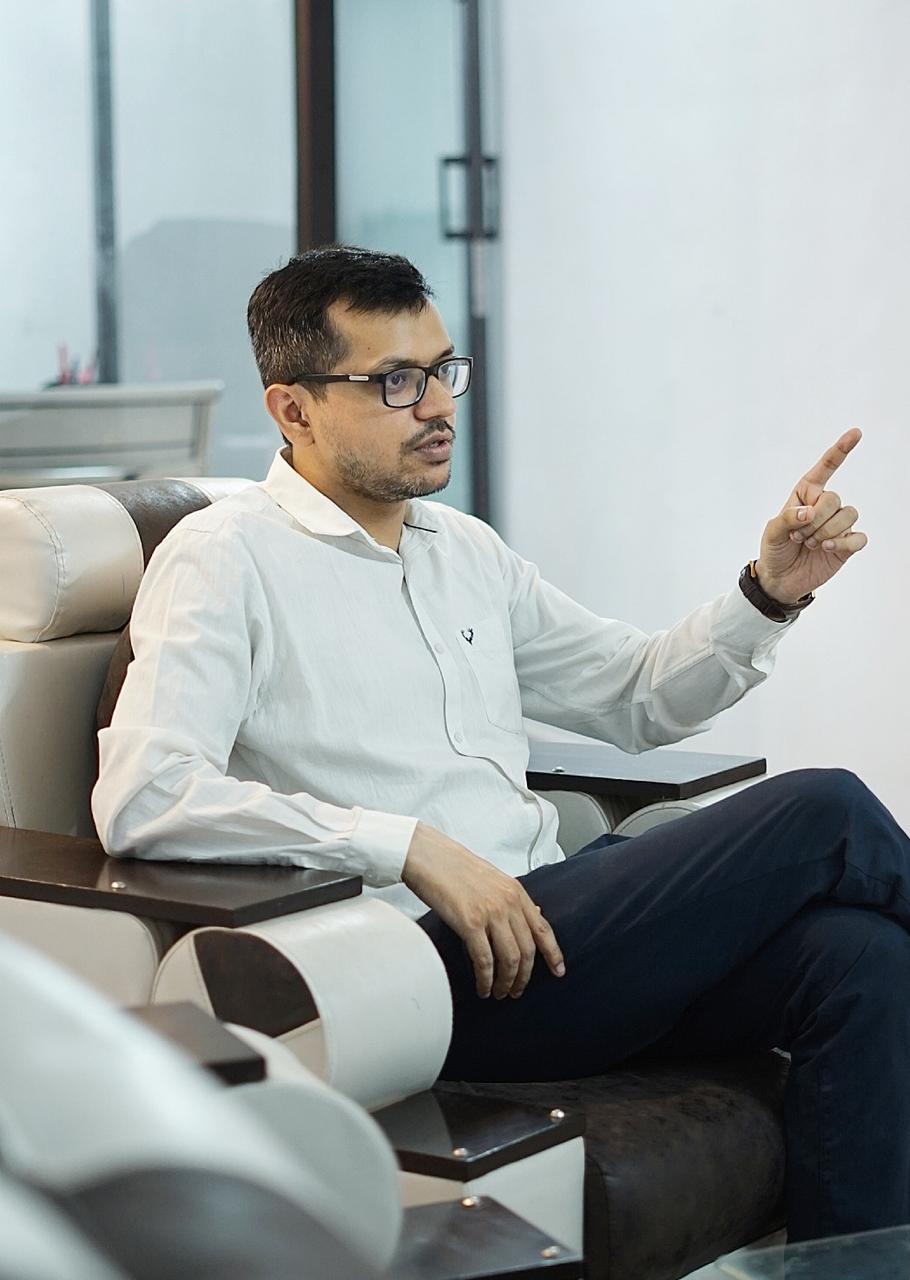
AIR 9.
That's what Harshit Nain secured in IPMAT 2026, earning his spot at IIM Indore. But his initial reaction was not one of overconfidence. He thought, "If it happens, it's a big deal." This isn't a story of blind luck; it's about focused strategy, mental resilience, and understanding what truly matters in India's toughest BBA entrance exam. We sat down with Harshit to get the unfiltered truth directly from an IPMAT topper strategy.
Here is a quick summary of Harshit's journey and insights:
Harshit Nain, IPMAT 2026 AIR 9, shares his raw strategy. He debunks common preparation myths, explains how to handle mock test score drops, and reveals the exact questions asked in the IIM Indore interview. His journey proves that focused preparation, conceptual clarity, and mental resilience are key to cracking India's toughest BBA entrance.
Cracking IPMAT 2026: harshit nain's journey to AIR 9
Harshit's success story is a blueprint for every future IIMer. When the results dropped, the feeling was surreal, he told us. He never had sky-high expectations, yet he landed a single-digit rank. This outcome came from a structured approach, which he discussed in detail with Deepak Sir, Co-Founder of IPM Careers. A clear roadmap and consistent effort, rather than sporadic bursts of study, defined his path.
The conversation went beyond generic advice. It was a deep dive into his preparation journey, his experience with IPM Careers, and the realities of the exam and interview process. Harshit shows that conceptual understanding and consistent effort are far more valuable than simply memorizing formulas or facts. Many aspirants fall into the trap of rote learning, but IPMAT Quant and IPMAT Verbal Ability sections truly test your ability to apply concepts under pressure. He focused on building a strong foundation, which ultimately paid off.
Ipmat myths vs reality: what toppers actually do
Many students preparing for IPMAT believe certain things that simply aren't true. Harshit's journey to AIR 9 debunks several of these common myths, offering a realistic perspective. Understanding the reality makes your IPMAT preparation strategy much more effective.
Here is a comparison of common IPMAT preparation myths and the reality, according to Harshit:
| IPMAT Preparation Myth | Topper Reality (Harshit's Insight) |
|---|---|
| "You need to score consistently high in every mock." | Mock scores fluctuate. Focus on analyzing mistakes and learning from each test, not just the raw score. |
| "Only perfect answers count in the interview." | Interviewers value conceptual understanding and honesty. It is okay to admit you do not know, then make an educated guess if allowed. |
| "Rote learning formulas guarantees success in Quant." | Conceptual clarity is paramount. IPMAT Quant often tests application, not just recall. Understand why a formula works. |
| "Covering every single topic is essential." | Prioritise high-weightage topics. A strong grasp of core concepts across sections is more effective than shallow knowledge of everything. |
| "The interview is purely about academic knowledge." | Communication, problem-solving approach, and personality also play a significant role. Be ready for diverse questions. |
Harshit stresses that mock tests are for learning, not just scoring. He often faced score drops, but he used them as opportunities to identify weaknesses and refine his overall IPMAT exam strategy. After each mock, he dedicated significant time to reviewing every question, understanding the solution, and noting down areas for improvement. This detailed analysis, rather than simply moving to the next mock, built resilience and sharpened his skills. He learned to embrace setbacks as stepping stones.
simply memorizing [IPMAT Quant] formulas will not get you far. The exam often presents problems that require a deep understanding of mathematical principles, asking you to apply them in novel ways. Harshit focused on understanding the derivation and logic behind each formula. This foundational knowledge helped him tackle even tricky questions. Similarly, for [IPMAT Verbal Ability], he concentrated on building strong reading comprehension and grammar skills rather than just learning vocabulary lists.
Inside the IIM indore interview room: AIR 9's experience
The IIM Indore interview is a crucial step in the IPMAT selection process. Harshit shared his experience, giving us a rare glimpse into what they actually ask and how they assess candidates. The conversation was dynamic, probing both his knowledge and his thought process. This stage is designed to evaluate your overall personality and potential, not just your academic scores.
One specific question involved combinatorics. He was asked about the number of handshakes possible among 100 people. Harshit correctly answered "100C2". However, the interviewers then grilled him on why this formula works. They wanted to test his conceptual understanding of the 'C' (combination) operation, not just his ability to recall a formula. This "conceptual grilling" is a common technique used by IIM interviewers to differentiate candidates who truly understand from those who only rote learn. To prepare, ensure you can explain the 'why' behind every formula or concept you cite.
He also faced a couple of finance questions. Harshit openly admitted that finance was not his primary stream, so he was a bit confused initially. But he tried his best to answer them, demonstrating his willingness to engage even with unfamiliar topics. This willingness to learn and articulate your reasoning, even when uncertain, is often more important than getting every answer perfectly right. It shows a proactive and honest approach.
Another question was about "financial literacy". Harshit did not know the exact definition. Instead of fumbling or guessing blindly, he politely asked the interviewer, "Can I make an educated guess?" This showed respect and a logical approach to problem-solving. He then proceeded to articulate his understanding based on his general knowledge. Out of approximately seven or eight questions asked, he could not answer one outright but managed to make an educated guess for another. This shows that you do not need to be a walking encyclopedia. Your approach, communication skills, and honest effort count significantly. Be prepared for a mix of academic, current affairs (IPMAT Current Affairs), and personal questions.
The final 30 days: mental game and strategy
The last month before IPMAT can be incredibly intense and stressful for aspirants. Harshit's strategy for these crucial 30 days focused heavily on mental conditioning and refining his preparation, rather than cramming new topics. He suggests not introducing too many new concepts at this stage. Instead, consolidate what you have learned and strengthen your existing knowledge base.
This period is all about intensive revision, detailed mock test analysis, and maintaining a positive mindset. Harshit recommends focusing on your strengths while strategically addressing your weaker areas. For revision, create short notes and flashcards for key formulas and concepts. Practice timed sectional tests to improve speed and accuracy. Do not get bogged down by every single difficult question; prioritise what is feasible to improve within the limited time.
Your mental state plays a huge role in exam performance. Harshit focused on positive self-talk and visualising success. Regular, short breaks and light physical activity can help manage stress and prevent burnout. Staying calm, confident, and trusting your preparation can give you a significant edge on exam day. Remember, the goal is to perform your best with the knowledge you have.
For a deeper dive into structured preparation, check out our guide on IPMAT preparation strategy. It provides a framework similar to what toppers like Harshit follow.
Watch the full discussion with Harshit Nain (IPMAT 2026 AIR 9) and Deepak Sir here:
Ready to start your journey to [IIM Indore]? Get a personalised strategy or clarify your doubts.
Connect with an IPM Careers expert on WhatsApp or use our IPMAT Call Predictor.
FAQs
What was Harshit Nain's All India Rank in IPMAT 2026?+
Harshit Nain secured an impressive All India Rank (AIR) 9 in the IPMAT 2026 examination, which led to his admission into IIM Indore's IPM program.
What kind of questions can I expect in the IIM Indore interview?+
Based on Harshit's experience, expect questions testing your conceptual clarity (e.g., combinatorics), general awareness (e.g., financial literacy), and ability to think on your feet. It is crucial to be honest about what you know and to articulate your thought process clearly.
How should I approach mock tests and handle score fluctuations during IPMAT preparation?+
Treat mock tests as learning opportunities, not just score benchmarks. Focus on detailed analysis of your mistakes, identify weak areas, and use insights to refine your strategy. It is normal for scores to fluctuate; the goal is continuous improvement and building resilience.