
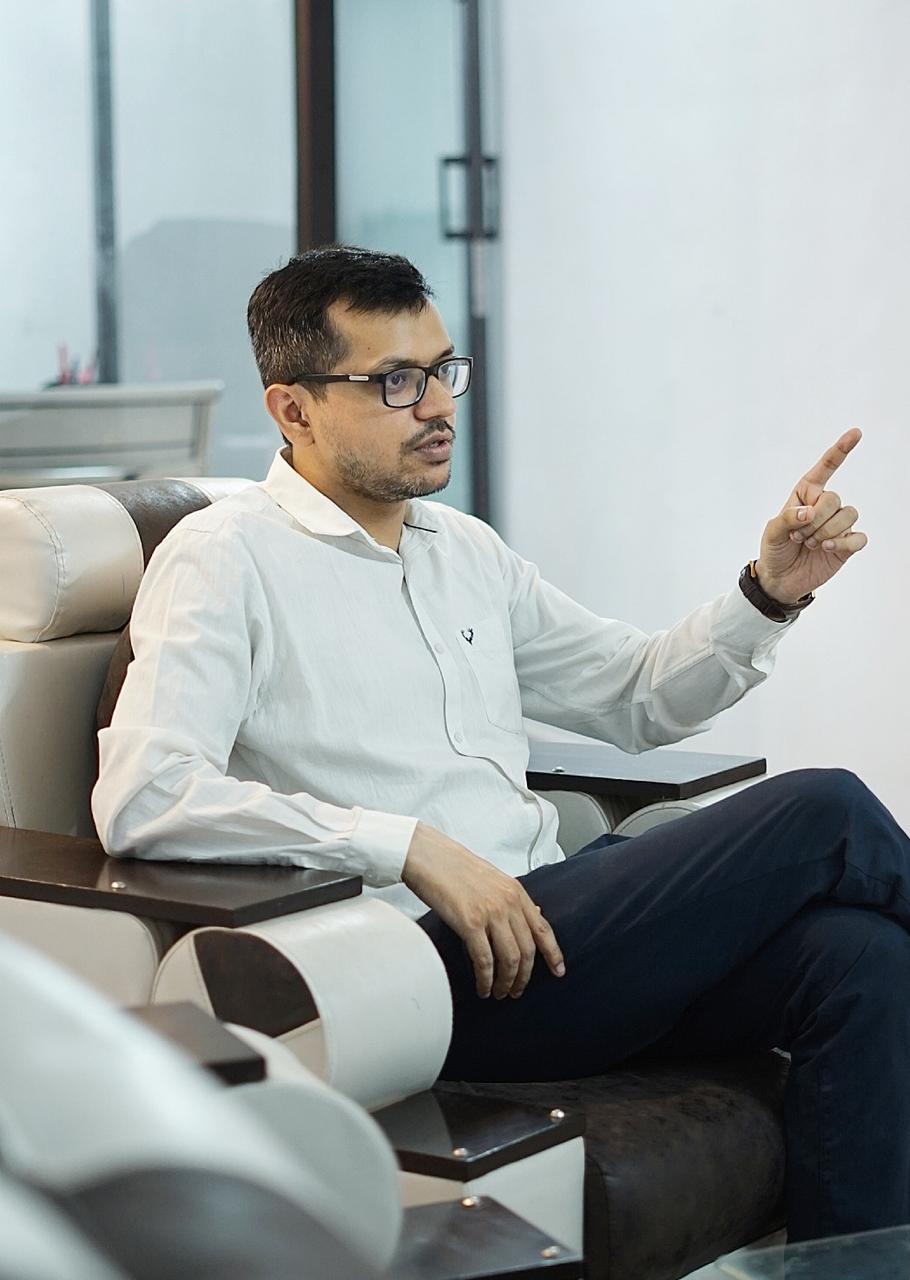
Most IPMAT aspirants get this wrong: they focus solely on exam scores, forgetting the interview is equally critical. Here's what the data actually says about how the final selection works.
TL;DR: Your IPMAT interview is not just about answers, it's about your entire persona.
- WAT & PI carry significant weightage (30-50% combined) in your final IIM selection. It's where your personality, communication, and leadership potential are truly assessed.
- Structured answers matter. Use frameworks like STAR, PAR, or CAR for behavioural questions to provide clear, concise responses.
- Non-verbal cues are crucial. Maintain eye contact, have confident posture, and use appropriate gestures. Your body language speaks volumes.
- Practice, practice, practice. Engage in mock interviews, get feedback, and refine your approach. The AI mock interview tool on register.ipmcareer.com can be a game-changer.
Why the ipmat interview matters more than you think
Your journey to an IIM for the Integrated Programme in Management (IPM) doesn't end with clearing the IPMAT written exam. In fact, that's often just the first hurdle. The Written Ability Test (WAT) and Personal Interview (PI) rounds are designed to assess your overall personality, communication skills, leadership potential, and suitability for a rigorous management program.
Consider IIM Indore, which typically assigns a weightage of around 35-45% to the PI round in its final selection process. IIM Rohtak also gives significant importance to the interview. This means even with a stellar IPMAT score, a weak interview performance can cost you your dream IIM seat. It's not just about what you know, but how you present yourself.
Ipmat interview stages: wat vs pi breakdown
Understanding the distinct components of the IPMAT interview process is your first step to mastering it. The WAT and PI rounds test different yet complementary skills. Let's look at how they compare.
| Feature | Written Ability Test (WAT) | Personal Interview (PI) |
|---|---|---|
| Purpose | Assess writing skills, logical thought, opinion formation | Evaluate personality, communication, leadership, suitability |
| Format | Essay on given topic (approx. 200-400 words) | One-on-one or panel discussion (15-30 minutes) |
| Common Topics | Current affairs, socio-economic issues, abstract ideas | Personal background, academics, career goals, situational |
| Key Skills Tested | Structure, grammar, clarity, critical thinking | Confidence, articulation, problem-solving, emotional intelligence |
| Weightage | Varies by IIM, usually 10-20% | Varies by IIM, usually 30-45% |
Written ability test (wat): penning your thoughts effectively
The WAT typically requires you to write an essay on a given topic within a limited timeframe, usually 15-30 minutes. This tests your ability to structure arguments, present a coherent viewpoint, and express yourself clearly under pressure. Common WAT topics often revolve around:
- Current Affairs: Recent national or international events, policy changes, economic trends (e.g., 'Impact of AI on the Indian job market', 'India's role in global climate change initiatives').
- Socio-economic Issues: Poverty, education, healthcare, gender equality (e.g., 'Challenges of urbanisation in India', 'The future of remote work').
- Abstract Topics: Philosophical concepts, general observations (e.g., 'Is ignorance bliss?', 'The colour blue').
- Ethical Dilemmas: Situations requiring a moral choice (e.g., 'Should companies prioritise profit over social responsibility?').
Your goal is not necessarily to agree or disagree, but to present a balanced argument, support your claims with logic, and ensure impeccable grammar and vocabulary. Start with an introduction, develop your points with examples, and conclude with a summary or forward-looking statement.
Personal interview (pi): showing your true self
The Personal Interview is your chance to shine as an individual. The panel wants to understand your motivations, strengths, weaknesses, and how you handle pressure. Based on real interview simulations with IIM alumni, PI questions generally fall into these categories:
"Tell me about yourself" and background: This is almost always the first question. It's your opportunity to introduce your family background, academic journey, key achievements, and hobbies. For example, an aspirant might start by saying, "I live in a family of four. My father is a real estate agent, and my mother is a homemaker. My brother is pursuing BT from BITS Pilani. I was born in Hamirpur but moved to Kanpur in 9th grade for better education opportunities." This sets the stage for further discussion.
Academic background and interests: Be prepared to discuss your favourite subjects, academic performance, and any projects or research you've undertaken. If you're a commerce student with maths, expect questions about your comfort level with quantitative subjects. In one simulation, an aspirant admitted, "Sir, right now I'm not comfortable with maths, but I can still try to answer your questions." This is a red flag. While honesty is good, you must show preparedness for IPMAT's Quant section. A better response might acknowledge past focus on other subjects but immediately pivot to current preparation efforts for IPMAT maths.
Extracurricular activities and leadership: The panel looks for well-rounded individuals. Discuss your participation in school competitions, student council roles (e.g., prefect for 2 years, vice house captain for 1 year), sports, or cultural events. If you stopped participating in extracurriculars to focus on studies, explain your reasoning clearly and show how it contributed to your overall development.
Why IPM? Why IIM? This is crucial. Your answer must reflect genuine interest in management, understanding of the IPM program structure, and knowledge about the specific IIM you are interviewing for. Research their faculty, specialisations, and campus culture.
Situational and HR questions: These test your problem-solving skills and how you react under pressure. Questions like "How do you handle conflict?" or "Describe a time you failed and what you learned" are common. Using frameworks like STAR (Situation, Task, Action, Result) or PAR (Problem, Action, Result) can help you structure these answers effectively. For more on this, check out our guide on Ace Your IPMAT PI: Master STAR, PAR, CAR Interview Frameworks.
General knowledge and current affairs: Stay updated on national and international news. You might be asked about recent events, key economic indicators, or even fundamental concepts from your chosen subjects, like "What is the value of factorial zero?" (Answer: 1).
Mastering your delivery: body language and communication
Your words are only part of the message. How you deliver them often makes a bigger impact. The interview panel observes your entire demeanour. Here's how to ensure your body language and communication reinforce your confidence and capability.
- Eye Contact: Maintain consistent, comfortable eye contact with each panel member. This shows engagement, confidence, and honesty. Avoid staring or looking away too much.
- Posture: Sit upright with a straight back. Avoid slouching or fidgeting. A confident posture projects professionalism and attentiveness. Lean slightly forward to show interest.
- Gestures: Use natural, controlled hand gestures to emphasise points. Avoid crossing your arms, pointing aggressively, or excessive fidgeting, which can signal nervousness or defensiveness.
- Facial Expressions: A warm, open expression is inviting. Smile appropriately, especially when greeting the panel. Your expressions should match the tone of your answers.
- Voice Modulation: Speak clearly, at a moderate pace, and with appropriate volume. Vary your tone to keep the conversation engaging. Avoid mumbling or speaking in a monotone. A confident voice conveys authority and conviction.
- Active Listening: Pay close attention to the questions asked. Nod to show understanding. Don't interrupt. If unsure, politely ask for clarification rather than guessing an answer.
- Confidence, Not Arrogance: Project self-assurance in your abilities and answers, but remain humble and open to learning. There is a fine line between confidence and arrogance; ensure you stay on the right side of it.
Remember, the goal is to appear composed, thoughtful, and genuinely interested in the conversation. Practice in front of a mirror or record yourself to identify areas for improvement.
Your ipmat 2026 interview practice roadmap
Success in the IPMAT interview is not about luck; it's about meticulous preparation and consistent practice. Treat your interview prep with the same seriousness as your IPMAT written exam. Here's a structured plan to help you ace it.
Self-reflection and SWOT analysis: Before you even begin mock interviews, spend time understanding yourself. List your strengths, weaknesses, opportunities, and threats (SWOT). Think about specific examples for each. What are your proudest achievements? What challenges have you overcome? Why do you want to join IPM? This forms the bedrock of your personal narrative.
Current affairs mastery: Dedicate 30-45 minutes daily to reading newspapers and reputable online news sources. Focus on national policies, economic developments, social issues, and major international events. Formulate your own opinions on these topics and be ready to defend them logically.
Mock interviews with feedback: This is non-negotiable. Participate in as many mock interviews as possible. Seek feedback from mentors, teachers, or IIM alumni. IPM Careers offers an AI mock interview with live feedback, which can provide objective insights into your performance, body language, and answer structure. This tool is invaluable for identifying blind spots.
Recorded practice: Record yourself answering common PI questions. Watch these recordings critically. Are you fidgeting? Is your voice clear? Are your answers structured? This self-analysis is powerful for improvement.
Group discussions (if applicable): Some IIMs might include Group Discussions (GDs) in their selection process, though for IPMAT it's typically WAT and PI. If GDs are part of your target IIM's process, practice articulating your points clearly and collaborating effectively in a group setting.
Refine your narrative: Ensure your answers are consistent and tell a compelling story about who you are and why you belong at an IIM. Practice answering questions about your academic background, extracurriculars, and career aspirations, linking them all back to your motivation for IPM.
For more detailed strategies on PI, refer to our comprehensive guide: IPMAT 2026 Interview: Ace Your PI with Real-World Prep & Strategy.
Watch the full discussion with an IIM Alumnus for more insights: How to Crack the IPMAT 2026 Interview? | Real Interview Simulation with IIM Alumnus
Ready to put your preparation to the test? Check your IPM eligibility in 30 seconds here or connect with our counsellors on WhatsApp at +918299470392 for personalised guidance.
Frequently asked questions (faq)
FAQs
What is the weightage of the IPMAT interview in final selection?+
The Personal Interview (PI) round typically holds a significant weightage, often ranging from 30% to 45% in the final selection process for IIMs like IIM Indore and IIM Rohtak. The Written Ability Test (WAT) usually contributes an additional 10-20%. This means your interview performance is crucial for securing an IIM seat.
What are common questions asked in the IPMAT PI round?+
Common PI questions include "Tell me about yourself," questions about your academic background, extracurricular activities, strengths and weaknesses, reasons for pursuing IPM, career aspirations, and current affairs. You might also face situational questions or specific queries related to your chosen subjects, such as maths concepts.
How can I improve my body language for the IPMAT interview?+
To improve your body language, focus on maintaining consistent eye contact, sitting with a confident and upright posture, using natural hand gestures, and having appropriate facial expressions. Speak clearly with modulated voice, and practice active listening. Recording yourself during mock interviews can help you identify and correct nervous habits.
Should I be honest about my weaknesses, like discomfort with a subject?+
Honesty is valued, but it's crucial to present weaknesses constructively. If you mention discomfort with a subject like maths, immediately follow up with what steps you are taking to overcome it and how you are preparing for the quantitative sections of IPMAT. Avoid simply stating a weakness without demonstrating efforts to improve.