
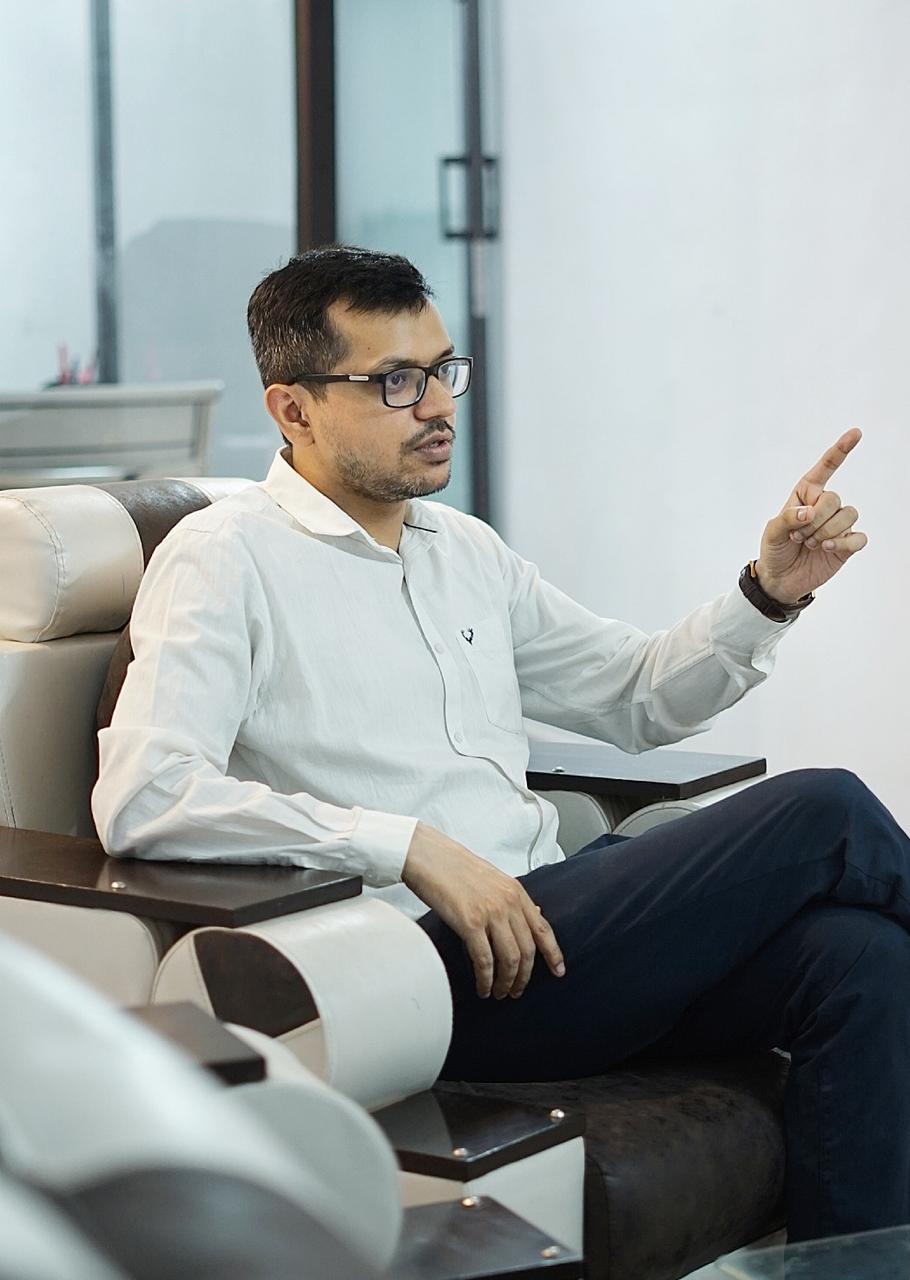
Most IPMAT aspirants get this wrong. They chase myths instead of mastering the fundamentals. Here's what the data, and an actual AIR 9, tells us.
TL;DR: IPMAT 2026 AIR 9 Harshit Nain's journey proves conceptual clarity trumps rote learning. He shows honest mock test analysis, strategic guessing in interviews, and a calm, focused approach in the final month. Forget the hype, focus on the grind.
From aspirant to air 9: harshit nain's iim indore story
Harshit Nain achieved an impressive All India Rank 9 in IPMAT 2026. This wasn't a fluke; it was the result of focused effort and smart strategy. He admits his initial expectations weren't sky-high, yet his dedication paid off. His story offers a blueprint for aspiring IIMers.
Debunking ipmat myths: the reality check
Many students believe they need perfect scores in every mock or must solve every single question in the exam. Harshit's experience shows this isn't true. He focused on understanding concepts deeply rather than superficial memorization. The real challenge is not just knowing answers, but knowing why they are correct. Another common myth is that you need to start preparing from Class 9 or 10. While early exposure helps, focused preparation in Class 11 and 12 is often sufficient. The real secret, according to Harshit, lies in conceptual clarity over superficial memorisation. This approach builds a strong foundation, crucial for both the written exam and the IIM interview.
"I thought getting into an IIM was a huge deal, almost surreal. But it happened because I focused on the process, not just the outcome."
Mock test mastery: riding the score rollercoaster
Mock tests are your battleground before the actual war. Harshit shows the raw reality: scores fluctuate. It's common to see dips, especially when experimenting with new strategies or tackling tougher papers. Don't let a low score demotivate you.
Instead, treat every mock as a critical learning session. After each test, dedicate ample time to analysis. Identify not just the wrong answers, but also the questions you skipped, the time spent per section, and recurring error patterns. Were you weak in a specific Quant topic? Did Verbal Ability passages take too long? Understanding these nuances helps you refine your strategy. Harshit used these insights to patch his weak areas, turning potential setbacks into significant improvements. This consistent analysis transforms every mock into a step closer to your IIM dream.
Cracking the iim indore interview: inside the room
The IIM Indore interview is more than just a Q&A session; it's a test of your personality, critical thinking, and genuine interest in the IPM program. Harshit's experience provides a crucial look inside this high-stakes room. He faced direct conceptual grilling. For instance, after correctly stating the answer for the "handshake problem" (100C2), the interviewers didn't stop there. They pushed him to explain the underlying logic, testing his fundamental grasp of permutations and combinations. This shows they value depth of understanding over mere recall.
He also encountered questions outside his comfort zone, like those on finance. While he wasn't fully proficient, his approach was key: he tried his best and remained honest. When asked to define "financial literacy," a term he wasn't perfectly sure about, he politely asked for permission to make an "educated guess." This move is strategic. It shows self-awareness, a willingness to engage, and confidence to think on your feet, qualities highly prized by IIMs. It's better to offer a thoughtful, reasoned response, even if not fully accurate, than to remain silent or bluff.
The interview panel typically looks for:
- Clarity of Thought: Can you articulate your ideas logically?
- Problem-Solving Aptitude: How do you approach unfamiliar problems?
- General Awareness: Are you aware of current events and basic concepts?
- Motivation & Fit: Why IPM? Why IIM Indore?
- Honesty & Authenticity: Can you admit when you don't know something, and still try?
Here's a breakdown of the types of questions you might face, based on Harshit's experience and general IIM interview trends:
| Question Type | Example from Harshit's Interview | What it tests |
|---|---|---|
| Conceptual Clarity | "Why is the handshake problem 100C2?" | Deep understanding, logical reasoning |
| Current Affairs/GK | (Not explicitly mentioned, but common in IIM interviews) | Awareness, analytical thinking |
| Personal Background | "Tell us about yourself," "Why IPM?" | Self-awareness, motivation, fit for the program |
| Subject-Specific (Optional) | Finance questions (despite not being his stream) | Breadth of knowledge, willingness to learn |
| Problem-Solving | "What is financial literacy?" (followed by educated guess) | Ability to think on feet, articulate, honesty |
| Ethical Dilemma | (Not explicitly mentioned, but common in IIM interviews) | Moral compass, decision-making under pressure |
Harshit estimates he was asked around seven or eight questions. He couldn't answer one outright but chose to make an educated guess, a strategy that clearly worked in his favour. Your attitude and approach often matter as much as the answers themselves.
The final 30 days: mental game & last-minute strategy
The last month before IPMAT is a make-or-break period. Harshit's strategy for these crucial 30 days was less about learning new concepts and more about consolidation and mental resilience. This phase is about fine-tuning, not overhauling.
- Focused Revision: Revisit all key formulas, theorems, and verbal ability rules. Create short notes or flashcards for quick review. Don't try to master new, complex topics. Instead, strengthen your existing knowledge base.
- Previous Year Papers (PYPs): Solve as many full-length PYPs as possible under timed conditions. This helps you understand the exam pattern, question types, and time management. It also builds stamina for the actual test.
- Identify High-Yield Areas: Based on your mock analysis and PYP review, pinpoint topics that frequently appear and where you can score easy marks. Prioritize these for revision.
- Mental Conditioning: Stress and anxiety can derail your performance. Harshit shows staying calm and confident. Practice mindfulness, get adequate sleep, and engage in light physical activity. Trust the preparation you've already put in. Avoid discussing your preparation with peers excessively, as this can lead to unnecessary comparisons and stress.
- Strategy Refinement: Based on your performance in recent mocks and PYPs, finalise your section-wise strategy for the main exam. This includes your approach to difficult questions, how much time to allocate to each section, and your overall attempt strategy.
This disciplined, calm approach can significantly boost your performance on D-day.
Your path to iim: next steps with ipm careers
Harshit's success story is a sign of focused preparation and strategic guidance. At IPM Careers, we believe every aspirant has the potential to crack IPMAT and secure a seat in an IIM. We offer the resources and mentorship you need to turn your IIM dream into reality.
Ready to take the next step? Explore our comprehensive courses and mock tests designed by IPMAT toppers. You can also use our IPMAT Call Predictor tool to assess your chances or join our WhatsApp community for direct support: wa.me/918299470392.
Watch the full discussion with Harshit Nain here: https://www.youtube.com/watch?v=0KWeh-yhD9g
FAQs
What was IPMAT 2026 AIR 9 Harshit Nain's key strategy for IIM Indore?+
Harshit Nain's core strategy involved deep conceptual understanding, honest mock test analysis to learn from mistakes, and a confident, authentic approach during the IIM Indore interview. He focused on logical reasoning and articulating his thought process, even when unsure of an exact answer.
How did Harshit Nain handle difficult questions in the IIM Indore interview?+
When faced with questions he didn't know the exact answer to, like "What is financial literacy?", Harshit chose to make an "educated guess" after seeking permission from the interviewer. This demonstrated honesty, confidence, and a willingness to engage, which is often valued by IIMs.
What role did mock tests play in Harshit Nain's IPMAT preparation?+
Mock tests were crucial for Harshit. He used them not just to score, but for in-depth analysis of his weaknesses and conceptual gaps. He emphasized that score drops are normal and should be seen as opportunities to improve, not as reasons for demotivation. Each mock was a learning opportunity to refine his strategy.
What did IIM Indore interviewers look for during Harshit Nain's interview?+
IIM Indore interviewers looked for Harshit's conceptual clarity, problem-solving aptitude, general awareness, and honesty. They grilled him on the 'why' behind his answers, assessing his logical reasoning and ability to think on his feet, rather than just rote memorization.