

IPMAT 2026 Interview: Ace Your PI with Real-World Prep & Strategy
Future IIMer, your journey to the prestigious Integrated Programme in Management (IPM) at IIMs like Indore and Rohtak does not end with a great IPMAT score. The Personal Interview (PI) is a crucial hurdle, often the deciding factor. It is where your personality, communication skills, and leadership potential truly shine.
Here is what you will learn from this guide:
- How to approach mock interviews effectively and what interviewers look for beyond academics.
- Strategies for analysing your mock interview performance and connecting it to IIM call potential.
- A clear action plan to refine your interview skills and confidently face the IPMAT 2026 PI.
Tl;dr: your IPMAT interview success blueprint
Cracking the IPMAT PI is about structured preparation. Engage in real mock interviews to get accurate feedback. Analyse your strengths and weaknesses in areas like communication, self-awareness, and leadership. Develop compelling answers for common questions and tailor your narrative to show your management aptitude. Your goal is to project confidence, clarity, and genuine interest in the IPM program.
Cracking the IPMAT interview: your journey starts now
The IPMAT Personal Interview is not merely a question-and-answer session; it is a conversation designed to understand your thought process, motivations, and suitability for a rigorous management program. IIMs seek well-rounded individuals who demonstrate initiative, leadership, and a clear vision for their future. This stage assesses your soft skills, which are critical for a successful career in management.
Beyond academics: what interviewers look for
Interview panels are keen to see evidence of your capabilities outside the classroom. They value experiences that show teamwork, problem-solving, and resilience. For instance, a candidate who served on a student council from Class 9 to 12, managing inter-school competitions and annual functions, displays strong organisational and leadership skills. Similarly, leading a cricket team to finals demonstrates composure under pressure and the ability to motivate others. These experiences are far more impactful than just mentioning good grades. They provide concrete examples of your potential.
The mock test strategy: simulate to succeed
Mock interviews are your best tool for mastering the IPMAT PI. They provide a realistic simulation of the actual interview environment, allowing you to practice under pressure and receive constructive feedback. Think of it as a dress rehearsal before the big show. Without practice, even the most brilliant students can falter due to nervousness or unexpected questions.
Why real mock interviews matter
Taking a free full-pattern IPMAT mock interview gives you a real percentile, helping you gauge your standing. An AI mock interview with live feedback, like the one offered by IPM Careers, can instantly shows areas for improvement. This immediate feedback is invaluable for refining your communication style, body language, and content delivery. It helps you identify tics or habits that might detract from your message. Do not underestimate the power of consistent practice with varied questions and interviewers.
Deep dive into score analysis
After a mock interview, simply completing it is not enough. The real learning happens when you meticulously analyse your performance. This analysis involves understanding where you excelled and where you fell short. It is about converting raw feedback into actionable insights for improvement. Without this step, you risk repeating the same mistakes in the actual IPMAT interview.
Interpreting your performance
Your mock interview score and feedback are crucial for mapping your potential for an IIM call. Look beyond a mere number. Did you articulate your thoughts clearly? Was your body language confident? Did you answer specific questions with substance and relevance? For instance, if you were asked about your interest in management, a strong answer would link your school experiences (e.g., event management, leadership roles) directly to your motivation for IPM. A weak answer might be vague or generic. Focus on specific areas of improvement identified by the interviewer, such as structuring answers better or managing pauses. This self-assessment is key.
Here is a simple framework for analysing your mock interview performance:
| Assessment Area | Excellent (4-5) | Good (3) | Needs Improvement (1-2) |
|---|---|---|---|
| Clarity & Articulation | Answers were precise, well-structured, easy to follow. | Answers were mostly clear, but sometimes lacked structure. | Answers were unclear, rambling, or hard to understand. |
| Content & Depth | Demonstrated deep understanding, specific examples. | Showed decent knowledge, but lacked specific examples. | Answers were superficial, generic, or off-topic. |
| Confidence & Poise | Maintained eye contact, confident tone, calm under pressure. | Generally confident, some nervousness appeared. | Appeared nervous, hesitant, or avoided eye contact. |
| Motivation for IPM | Clear, well-reasoned, linked to personal goals/experience. | Stated interest, but lacked strong personal connection. | Vague or unconvincing reasons for choosing IPM. |
| Extracurricular Engagement | shows leadership, teamwork, specific achievements. | Mentioned activities, but did not elaborate on impact. | Little or no mention of activities, or no real impact shown. |
| Ability to Ask Questions | Asked insightful, relevant questions. | Asked a standard, safe question. | Did not ask a question, or asked a very basic one. |
Using such a table helps you quantify your performance and identify specific areas to work on. Remember, a score of 3 or above in most areas is generally good, but consistent 4s and 5s are what secure those IIM calls.
Crafting your action plan for IPMAT interview success
After a thorough analysis, it is time to build a concrete action plan. This involves targeted practice and refining your responses to common and challenging interview questions. Do not just passively absorb feedback; actively implement it. This proactive approach will transform your weaknesses into strengths.
Turning feedback into future IIM wins
Consider the types of questions typically asked. For example, "Why IPM?" requires a thoughtful answer that connects your aspirations with the program's structure and reputation. You might say, "From school, I have been interested in management. After Class 12, I discovered IPM as a path to pursue both undergraduate and postgraduate studies from a prestigious institute like an IIM." This shows clarity and research. Similarly, when asked about your post-IPM goals, a good answer would be, "As of now, I see myself completing my degree from an IIM in the next five years, followed by a role in consulting or finance." This shows foresight and ambition, even if the exact role is still evolving.
Another common area is current affairs or social issues. If asked about the impact of social media on young children, a balanced answer would acknowledge both exposure and the lack of awareness regarding its proper use. You could mention how some misuse it for negative activities, while for adults, it poses risks like personal information grabbing. This demonstrates critical thinking and awareness of societal challenges.
Lastly, always have a question ready for the panel. A strong question shows engagement and genuine interest. Instead of asking "How will management improve my life?", rephrase it to be more insightful, such as "How will better managerial skills help improve one's life in various areas?" This shows you are thinking about the broader application of management principles, not just personal gain.
IPM Careers offers a dedicated PI Preparation batch to guide you through these nuances.
Crucial tips from the IIM alumnus
Learning from those who have already navigated the IIM interview process is invaluable. An IIM alumnus, who has been on both sides of the interview table, can offer insights that go beyond standard advice. Their experience provides a realistic perspective on what works and what does not.
Mastering your narrative
The key is to master your personal narrative. Be authentic and consistent. Every answer should contribute to a cohesive story about who you are, what drives you, and why you belong in an IIM. Practice articulating your experiences, motivations, and future goals clearly and concisely. Ensure your responses are well-structured, beginning with a direct answer and then elaborating with examples. Remember, the interviewers want to see the real you, but the polished real you.
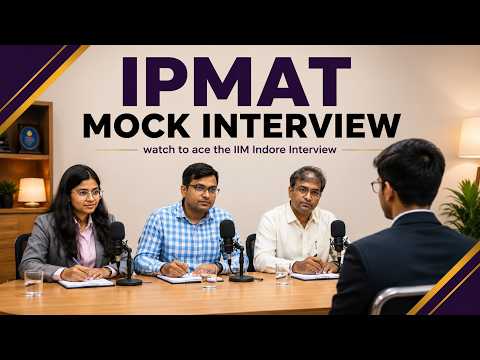
For a deeper dive into actual interview scenarios and expert advice, watch the full discussion here:
Ready to put your preparation to the test? Take a free full-pattern IPMAT mock to assess your real percentile or try an AI mock interview with live feedback. You can also connect with our counsellors on WhatsApp at wa.me/918299470392 for personalised guidance.
Frequently asked questions (FAQ)
Q1: what is the most important thing interviewers look for in IPMAT PI?
Interviewers primarily look for clarity of thought, strong communication skills, genuine motivation for management, and evidence of leadership potential and extracurricular involvement. They want to see how you connect your past experiences to your future aspirations in management, and how you handle pressure.
Q2: how can I prepare for common IPMAT interview questions like "why IPM?" or "tell me about yourself?"
Prepare structured answers that link your personal background, academic interests, and extracurricular activities to your genuine interest in management and the IPM program. Use specific examples to illustrate your points. Practice articulating these answers concisely and confidently.
Q3: how important are mock interviews for IPMAT PI preparation?
Mock interviews are extremely important. They provide a realistic simulation, help you identify weaknesses in your communication or content, and allow you to practice under pressure. The feedback from mock interviews is crucial for refining your responses, body language, and overall presentation before the actual PI.
Q4: should I ask questions to the interview panel?
Yes, absolutely. Asking insightful and relevant questions demonstrates your engagement, curiosity, and genuine interest in the IIM and the IPM program. Prepare one or two thoughtful questions beforehand, perhaps about the program's unique aspects, faculty research, or student life.
Q5: what if I do not have extensive leadership experience?
Even if you do not have formal leadership titles, focus on instances where you took initiative, collaborated in a team, resolved a conflict, or contributed significantly to a group project or event. shows the skills you developed, such as teamwork, problem-solving, or communication, through these experiences.
FAQs
What is the most important thing interviewers look for in IPMAT PI?+
Interviewers primarily look for clarity of thought, strong communication skills, genuine motivation for management, and evidence of leadership potential and extracurricular involvement. They want to see how you connect your past experiences to your future aspirations in management, and how you handle pressure.
How can I prepare for common IPMAT interview questions like "Why IPM?" or "Tell me about yourself?"+
Prepare structured answers that link your personal background, academic interests, and extracurricular activities to your genuine interest in management and the IPM program. Use specific examples to illustrate your points. Practice articulating these answers concisely and confidently.
How important are mock interviews for IPMAT PI preparation?+
Mock interviews are extremely important. They provide a realistic simulation, help you identify weaknesses in your communication or content, and allow you to practice under pressure. The feedback from mock interviews is crucial for refining your responses, body language, and overall presentation before the actual PI.
Should I ask questions to the interview panel?+
Yes, absolutely. Asking insightful and relevant questions demonstrates your engagement, curiosity, and genuine interest in the IIM and the IPM program. Prepare one or two thoughtful questions beforehand, perhaps about the program's unique aspects, faculty research, or student life.
What if I do not have extensive leadership experience?+
Even if you do not have formal leadership titles, focus on instances where you took initiative, collaborated in a team, resolved a conflict, or contributed significantly to a group project or event. Highlight the skills you developed, such as teamwork, problem-solving, or communication, through these experiences.